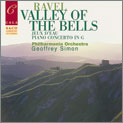
"This one of a series of SACDs from enterprising conductor Geoffrey Simon which might be viewed as standard “greatest hits” albums, but which are so well selected and presented - as well as enthusiastically performed - that the series takes on a higher calibre of interest" John Sunier, www.audaud.com
Ravel grew up in Paris during la belle epoque, the thirty-odd years prior to 1914 when Paris was the unquestioned artistic centre of the world. The fin de siecle years saw him enter the Paris Conservatoire. He was an immensely gifted youth, and one by one his early compositions began to show a real mastery of conception and execution-before the 1800s were out, he had produced such assured works as Habenera, Menuet antique, several fine songs, and Pavane pour une infante defunte.